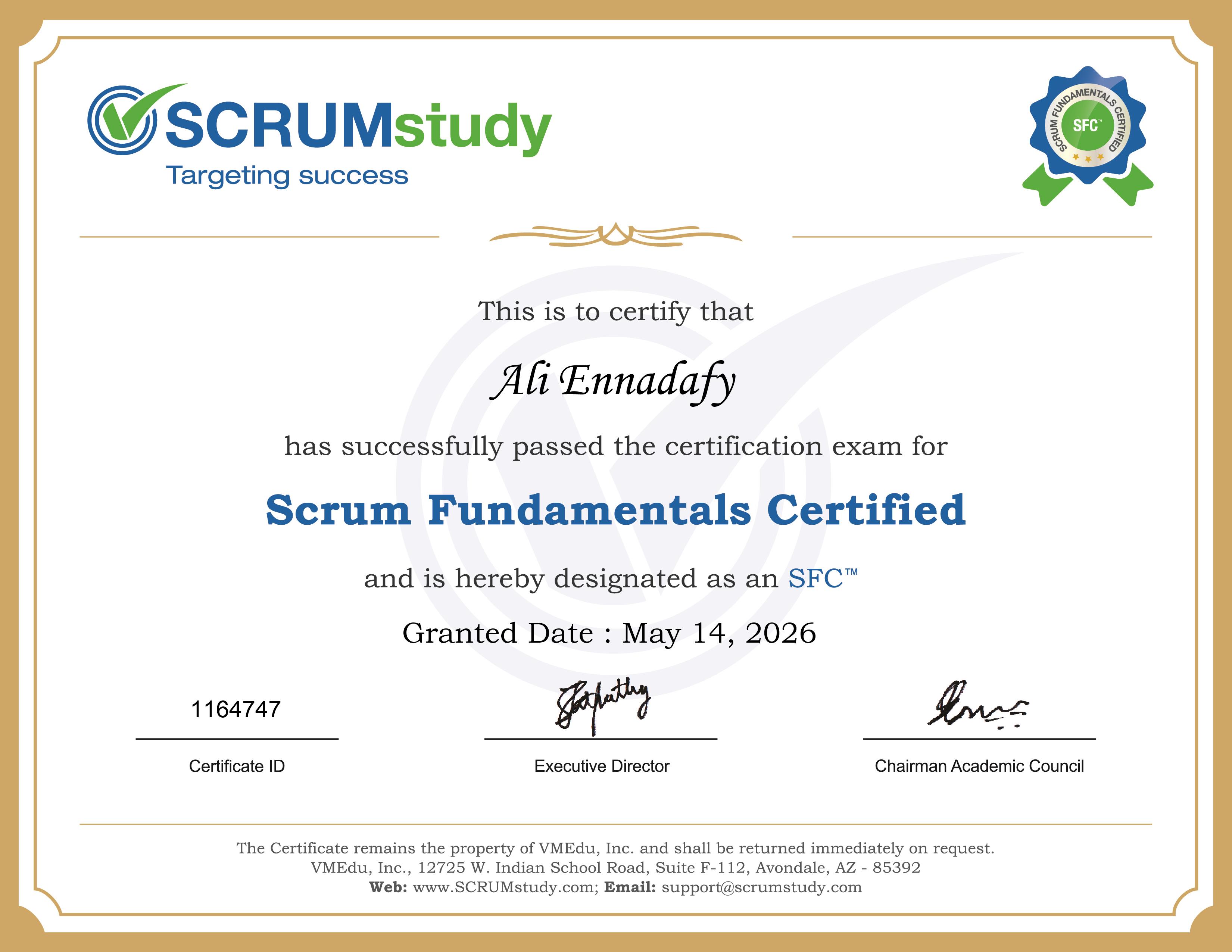
Scrum Fundamentals Certified (SFC™)
I recently challenged myself to learn more about how modern teams work together to build great products, and I’m happy to share that I’ve earned my Scrum Fundamentals Certification! This wasn't just about learning rules; it was about understanding a better way to work. During this course, I dived deep into the Scrum Framework and its core principles. I learned that project success isn't about huge plans made at the start, but about Empirical Process Control—which means being transparent, constantly inspecting our work, and being ready to adapt quickly to changes. What I practiced and learned: Transparency & Visibility: Using tools like Scrumboards and Burndown Charts so everyone knows exactly where the project stands. Effective Collaboration: How to work as a self-organized team where awareness and clear communication are key. Value-Based Prioritization: Learning how to focus on the most important tasks first to deliver real value to the customer. Time-boxing: Understanding how to manage time better by using fixed periods for tasks and meetings to stay productive. I’m now ready to bring this 'Agile mindset' to my future projects, focusing on teamwork, fast feedback, and delivering quality results.
What I Learned
Scrum Framework
I learned how Scrum works in the real world, moving from big plans to small, manageable steps called Sprints.
Learning by Doing
Mastered the "Empirical Process": being transparent about work, checking progress, and changing direction when needed.
Effective Teamwork
Understanding how a self-organized team works together. It’s all about awareness and helping each other reach the goal.
Focus on Value
Learned how to prioritize tasks. We focus on the most important things first to make the customer happy faster.
Work Visibility
Using tools like Scrumboards and Burndown charts so everyone—the team and the client—knows exactly what's happening.
Managing Time
Understanding "Time-boxing" to keep meetings short and productive, ensuring we don't waste time on things that don't matter.
Continuous Improvement
The importance of getting feedback early and often. We inspect the product and adapt to make it better every day.
Who Does What
Clear understanding of roles like Product Owner, Scrum Master, and the Team, and how each one helps the project succeed.
Interested in working together?
I'm available for freelance projects and full-time opportunities.
Hire Me